
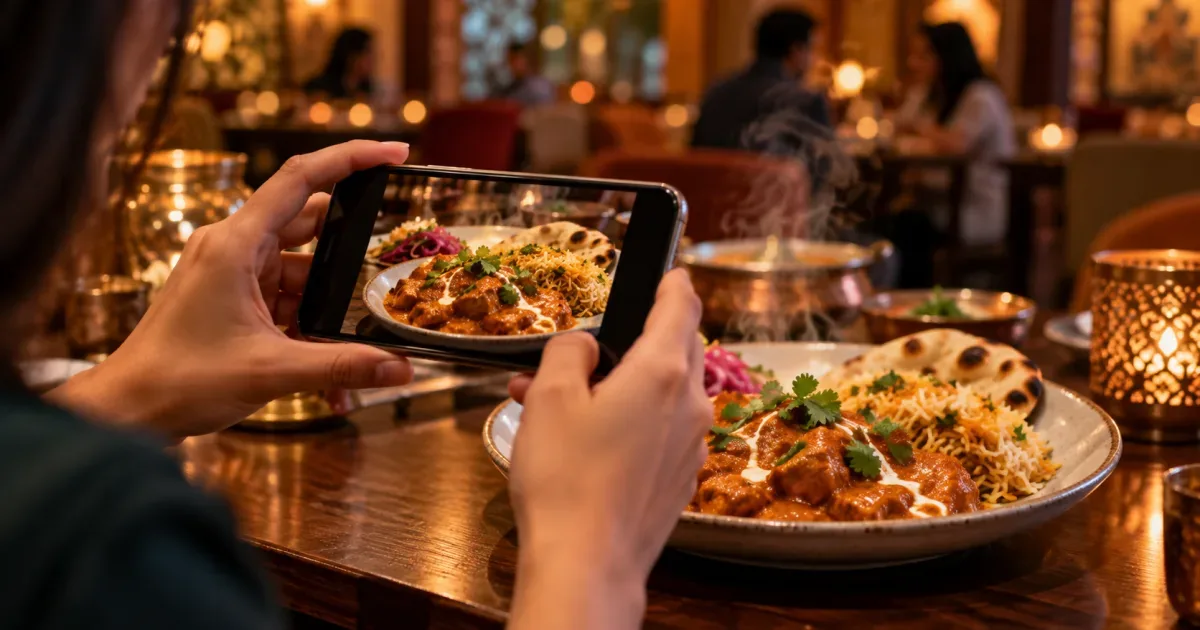
Your food is good. Your regulars love you. And yet on a slow Tuesday, the tables sit empty while a new place two lanes down is packed with people who found it on Instagram that afternoon. That gap between how good your restaurant is and how many people know about it is exactly what social media marketing for restaurants is meant to close.
In Mumbai, where someone decides where to eat by scrolling reels on the local train, your social presence is not a vanity project. It is distribution. It is the difference between being discovered by a hungry person 500 metres away and being invisible to them.
This is a practical playbook, not theory. We will cover why it matters for restaurants specifically, the content pillars that actually fill tables, how often to post, how to target locally, how to make Zomato and Swiggy work with your Instagram instead of against it, why your Google Business Profile matters as much as your feed, and a concrete 30-day content plan you can start tomorrow.
Why social media matters more for restaurants than almost any other business
Food is the most visual, most impulse-driven, most shareable thing you can sell. People do not plan dinner three weeks out; they decide in the moment, often based on a reel that made them hungry. A single good food reel can reach tens of thousands of local people for free, something no newspaper ad or hoarding can match at your budget.
Three things make restaurants uniquely suited to social:
- The product photographs beautifully. A cheese pull, a sizzling tawa, a cutting chai, a dessert being torched. This is content that stops the scroll.
- The decision is local and immediate. You are not trying to reach all of India, just hungry people in your few surrounding neighbourhoods, which Instagram and Meta ads target precisely.
- Every happy customer is a potential creator. Diners already photograph their food. Your job is to make them tag you and to turn that into reach.
The content pillars that fill tables
Random posting does not work. You need a rotation of content types, each doing a job. These are the pillars we build every restaurant calendar around.
1. Food reels (your biggest weapon)
Short, punchy videos of your best dishes being made or served. The cheese pull, the pour, the plating, the first bite. These are what the algorithm pushes hardest and what makes someone message a friend “let’s go here”. Aim to make these the backbone of your content. For a deep bank of concrete video concepts, our list of Instagram reels ideas for local service businesses has restaurant-specific hooks you can copy.
2. Behind-the-scenes
The kitchen at 7am, the chef prepping the biryani, fresh produce arriving, the team before service. This builds trust and personality, and people love feeling like insiders. It also humanises your brand so you are not just another menu.
3. Offers and specials
Weekday lunch deals, happy hours, festival menus, new launches, combo offers. These are your direct-response posts, the ones with a clear “come in today” message. Do not overdo them, but a well-timed offer on a slow day works.
4. User-generated content (UGC) and reposts
Every photo a customer posts and tags you in is free, trusted advertising. Repost it to your stories, thank them, and make tagging you worth their while. A wall of real diners enjoying your food is more persuasive than any ad you can design.
5. Reviews and social proof
Screenshots of glowing Google and Zomato reviews, turned into clean graphics. Testimonials in diners’ own words. This is the reassurance a first-timer needs before choosing you over the place next door.
6. Menu and signature dishes
Highlight the dishes you want to sell, especially high-margin ones. A beautifully shot signature dish, posted regularly, trains people to crave a specific thing from your restaurant.
The right mix leans heavily on reels and UGC, with offers and behind-the-scenes supporting. A rough weekly split: half your output video, a quarter social proof and UGC, a quarter offers, menu, and behind-the-scenes.
How often should a restaurant post?
Consistency beats intensity. A sustainable, effective cadence for most restaurants looks like this:
| Format | Frequency | Purpose |
|---|---|---|
| Reels | 3-5 per week | Reach new local audiences, drive discovery |
| Feed posts (static/carousel) | 2-3 per week | Menu, offers, social proof, brand |
| Stories | Daily (2-4 frames) | Specials, UGC reposts, polls, today’s vibe |
| Offers / promotions | 1-2 per week | Direct response on slow days |
If that sounds like a lot, it is, which is why most restaurants either hire help or batch-shoot. You can film a week’s worth of reels in a single service if you plan the shots. The goal is to never go dark: an account that posts daily stories and a few reels a week stays top of mind far better than one that posts ten times in a burst and then disappears.
Local targeting: reaching hungry people nearby
You do not need national reach. You need the people within a few kilometres who are deciding where to eat. Here is how to concentrate your effort locally:
- Location tags on every post and story. Tag your exact locality and neighbourhood so you appear when people browse place-based content.
- Local hashtags. Mix broad food tags with hyper-local ones like your suburb’s name plus “food”, “cafe”, or “foodie”. The local tags are less crowded and more likely to reach people who can actually visit.
- Collaborate with nearby creators. A reel made with a local food blogger puts you in front of exactly the right audience. Even micro-creators with a few thousand engaged local followers can drive real footfall.
- Meta ads with a radius. This is where paid wins for restaurants. Run your best reel as an ad targeted to a tight radius around your restaurant, to people who like food and dining out. A modest daily budget can put you in front of thousands of nearby diners. Routing those ad enquiries and reservation requests into fast WhatsApp replies is something we automate with our AI automation service so nobody falls through the cracks.
Making Zomato and Swiggy work with your Instagram
Too many restaurants treat the delivery apps and their own social as separate worlds. The smart move is to make them feed each other.
- Drive app orders from social. When you post a dish or an offer, mention it is available on Zomato and Swiggy and put the ordering link in your bio or story. Your Instagram reach becomes delivery orders.
- Turn app customers into followers. Add a small card or sticker in your delivery packaging inviting people to follow you on Instagram for offers. A delivery customer who follows you becomes a repeat customer you can reach for free.
- Promote app-exclusive deals on social. A “20% off today only on Swiggy” story creates urgency and funnels your audience to a platform that handles the transaction.
- Use social proof from the apps. Screenshot your best Zomato reviews and ratings and post them. A high rating displayed proudly reassures first-timers.
The apps own the transaction and the delivery logistics; your own channels own the brand, the discovery, and the direct relationship, without the commission. Used together, they compound.
Do not forget your Google Business Profile
When someone searches “restaurants near me” or your area plus “dinner”, Google’s map results decide who gets seen, not Instagram. Your Google Business Profile (GBP) is arguably as important as your feed for a restaurant. At minimum:
- Fill it completely: correct category, hours, menu link, phone, and ordering links.
- Add fresh photos regularly; the same food reels and dish shots work here too.
- Collect and reply to reviews actively. Volume and recency of reviews heavily influence whether you show up in the map pack.
- Post offers and updates directly on GBP, which supports posts just like social.
A restaurant that is strong on both Instagram and GBP captures both the impulse scroller and the intent-driven searcher. One without the other leaves money on the table.
A concrete 30-day restaurant content plan
Here is a real, usable month you can adapt starting tomorrow. It balances the pillars, keeps reels at the centre, and gives every day a purpose. Shoot in batches: film a week of reels in one or two service sessions, then schedule.
| Day | Post | Type |
|---|---|---|
| 1 (Mon) | Signature dish reel with a strong hook (“the dish people drive across town for”) | Reel |
| 2 (Tue) | Weekday lunch offer graphic + story countdown | Offer |
| 3 (Wed) | Behind-the-scenes: chef prepping your bestseller | Reel |
| 4 (Thu) | Repost 2-3 customer photos to stories, thank them | UGC/Stories |
| 5 (Fri) | Weekend “what’s cooking” teaser reel + dinner reservation CTA | Reel |
| 6 (Sat) | Ambience carousel: the vibe on a full Saturday night | Carousel |
| 7 (Sun) | Review screenshot graphic (best Google/Zomato review) | Social proof |
| 8 (Mon) | New dish launch reel | Reel |
| 9 (Tue) | Poll in stories: “which dish next?” + Swiggy order reminder | Stories |
| 10 (Wed) | Ingredient-focused reel: fresh produce arriving / masala being ground | Reel |
| 11 (Thu) | Meet the team: short intro to a chef or server | Post |
| 12 (Fri) | Weekend offer / combo graphic + story | Offer |
| 13 (Sat) | Fast-cut “a day in our kitchen” reel | Reel |
| 14 (Sun) | UGC repost round-up + tag reminder | UGC |
| 15 (Mon) | Dessert / drink reel (the shareable one) | Reel |
| 16 (Tue) | Menu highlight carousel: top 5 must-try dishes | Carousel |
| 17 (Wed) | Collab reel with a local food creator (plan ahead) | Reel |
| 18 (Thu) | Review graphic + “book your table” CTA | Social proof |
| 19 (Fri) | Weekend special reel | Reel |
| 20 (Sat) | Live-ish stories through Saturday service | Stories |
| 21 (Sun) | Family/Sunday brunch post | Post |
| 22 (Mon) | “How it’s made” reel for a popular dish | Reel |
| 23 (Tue) | Weekday deal reminder + Zomato link | Offer |
| 24 (Wed) | Behind-the-scenes plating reel | Reel |
| 25 (Thu) | UGC repost + feature a regular customer | UGC |
| 26 (Fri) | Weekend teaser reel + reservation CTA | Reel |
| 27 (Sat) | Ambience / crowd energy carousel | Carousel |
| 28 (Sun) | Month’s best review + gratitude post to customers | Social proof |
| 29 (Mon) | Tease next month’s new dish / event | Reel |
| 30 (Tue) | Loyalty offer: “follow + show this story for a free X” | Offer |
Run a Meta ad behind your two or three best-performing reels each week, targeted to a tight local radius. Keep a daily story going no matter what. At month’s end, look at which reels drove the most reach and saves, and make more like them next month. That feedback loop is how a restaurant account compounds.
Common mistakes restaurants make on social
- Only posting offers. If every post is a discount, you train people to wait for discounts. Mix in craving-building content.
- Bad photos. Dark, blurry food shots do more harm than no post. Shoot near a window, keep it clean, let the food shine.
- Ignoring DMs and comments. A reservation enquiry left unanswered for six hours is a lost table. Reply fast.
- Going quiet. Posting for two weeks then disappearing kills momentum. Consistency is the whole game.
- Forgetting GBP. A beautiful feed means little if you are invisible in Google’s map results.
If you cater events or weddings alongside your dine-in business, a slightly different lead-generation approach applies; our guide to digital marketing for banquet halls covers that enquiry-and-follow-up model. And if you want to see how package tiers and pricing map to this kind of content engine, our breakdown of social media marketing packages in India shows what a restaurant-grade retainer should include.
Frequently Asked Questions
How much should a restaurant spend on social media marketing?
It depends on whether you do it in-house or hire help. If you hire an agency in India, a restaurant-grade package typically runs ₹20,000 to ₹45,000 a month for content and management, plus ad spend. A sensible local ad budget starts modest and scales with results. The biggest cost is good reels, because video is what drives footfall, so do not cut that corner.
How many times a week should my restaurant post?
Aim for three to five reels a week, two to three feed posts, and daily stories. Consistency matters more than volume: an account that shows up daily stays top of mind far better than one that posts in bursts. You can batch-film a week of reels in a single service to make this manageable.
Should I focus on Instagram or Zomato and Swiggy?
Both, working together. The delivery apps own the transaction and delivery; Instagram and your Google Business Profile own discovery, brand, and the direct relationship without commission. Use social to drive app orders and reservations, and use packaging inserts to turn app customers into followers. They compound when linked.
Do food reels really bring in customers, or just likes?
When done right and backed with local targeting, reels drive real footfall, because they reach nearby people in a craving mindset. The key is a strong hook in the first second, mouth-watering visuals, and a clear nudge to visit or order. Pair your best reels with a small local Meta ad budget and you turn reach into reservations, not just likes.
Can I do this myself or do I need an agency?
You can start yourself, especially with the 30-day plan above. The honest constraint is time and consistency during service hours, plus the skill to shoot and edit reels that perform. Many restaurants do the filming themselves and hand editing, strategy, posting, and ads to an agency. Choose based on whether you can sustain the cadence week after week.
What is the single most important thing to get right?
Craving-building reels plus fast replies to enquiries. The reels bring people to your door; answering DMs and comments quickly converts that interest into bookings and orders. Everything else supports those two. If you only fix one thing, make your food look irresistible on video and never leave an enquiry waiting.
Primary sources for social media marketing for restaurants
Platform rules change constantly, so social media marketing for restaurants should be built on current official guidance rather than year-old blog posts.
- Instagram for Business — Instagram’s own guidance for business accounts.
- Google Business Profile Help — Google’s official Map Pack and listing documentation.
Let’s fill your tables, not just your feed
A busy Instagram account that does not translate into diners is just expensive decoration. At Hype Marketer, we build restaurant social media around what actually drives footfall and orders: scroll-stopping food reels, smart local targeting, Zomato and Swiggy synergy, and a Google Business Profile that gets you found when someone nearby is hungry right now.
If you want a content engine that turns hungry scrollers into regulars, talk to our team at Hype Marketer, a Mumbai digital marketing agency. We will build you a plan like the 30-day one above, tuned to your restaurant, your neighbourhood, and your best dishes.
3 thoughts on “Social Media Marketing for Restaurants: A Mumbai Playbook”